There's a predictable pattern to toy pricing that most parents learn the hard way: the toy your child wants in October is cheaper in October than it will be in December. Toy prices don't drop as the holidays approach — they rise. And by the time you're shopping in mid-December, the hottest toys are either sold out, marked up by third-party sellers, or both.
This isn't a random phenomenon. It's the result of supply and demand dynamics that play out the same way every year. Understanding the toy price curve is the difference between paying retail and paying a premium.
The Toy Price Curve
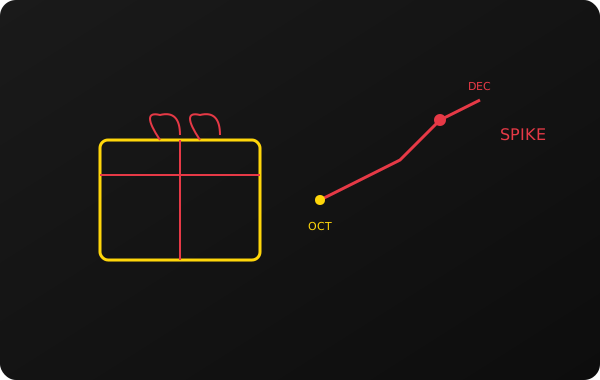
Toy prices follow a U-shaped curve through the holiday season. Here's what the data shows:
| Time Period | Price Trend | Strategy |
|---|---|---|
| September | Baseline retail pricing | Good time to buy — no urgency yet |
| October | First discounts appear | Best window for popular toys |
| Early November | Deals deepen, Black Friday toy sales | Second-best window |
| Black Friday week | Peak toy deals at major retailers | Last good deals window |
| December 1-15 | Prices begin rising; stock depletes | Avoid — paying premium |
| December 16-24 | Peak pricing, limited stock, third-party markups | Worst time to buy |
| Post-Christmas | Clearance on remaining inventory | Good for next year's gifts |
The cheapest time to buy holiday toys is October through Black Friday week. After that, prices only go up — and availability goes down. Waiting for "last-minute deals" on toys is a losing strategy.
Why Toy Prices Rise in December
The price increase isn't arbitrary. Three factors converge in December:
1. Inventory Depletion
Toy manufacturers produce a finite quantity of each product for the holiday season. By December, the most popular toys have already sold through their initial allocation. When stock is low and demand is high, retailers have no incentive to discount — they can sell at full price or above.
2. Third-Party Seller Markup
When major retailers run out of stock, third-party sellers on Amazon, Walmart Marketplace, and eBay step in. These sellers acquire remaining inventory and list it at significant markups — sometimes 50-100% above retail. If you're shopping for a specific hot toy in mid-December and the only listings are from third-party sellers, you're paying the scarcity premium.
3. Urgency Pricing
Retailers know that December shoppers are motivated by deadlines — they need the toy before the 25th. This removes the shopper's leverage. In October, you can walk away and wait for a better price. In December, you can't. Retailers price accordingly.
When to Actually Buy
October: The Smart Money Window
October is the best-kept secret in holiday toy shopping. Retailers begin their toy promotions in October, and the selection is at its widest. You're not competing with last-minute shoppers, stock is full, and early discounts are often as deep as they'll get. If you know what toys your children want, October is when you should act.
Early November: The Second Chance
If October passes, early November is your next window. Amazon, Target, and Walmart all run toy promotions in the first two weeks of November, often with doorbuster-style pricing on specific items. This is also when toy catalogs arrive in mailboxes — use them to identify what your children want, then buy immediately.
Black Friday Week: The Final Good Window
Black Friday itself is the last good window for toy deals. As we cover in the Black Friday timeline, toy deals are concentrated in the early-to-mid November period, not on Black Friday itself. But Black Friday week does see final promotions before December pricing kicks in. After this window closes, you're in premium territory.
Identifying Which Toys Will Sell Out
Not every toy will spike in price — only the ones that become "the hot toy" of the season. Here's how to predict which toys will sell out:
- Watch for "hot toy" lists. Retailers and publications release hot toy lists in September-October. Toys on these lists will sell faster.
- Monitor social media. If a toy is going viral on TikTok or YouTube, demand will spike unexpectedly.
- Check movie and show tie-ins. Toys tied to fall movie releases or streaming shows see sudden demand spikes.
- Track Amazon's Movers & Shakers. Amazon's bestseller charts show which toys are climbing fastest.
The Budget Factor
Toy shopping is one of the areas where a budget matters most — and where it's hardest to stick to. When your child wants something specific, it's emotionally difficult to say no, even if the price has doubled. This is why we recommend buying early: it lets you make purchasing decisions with your head, not your heart.
Our holiday budget guide walks through setting a total spending cap before the season begins. For toys specifically, we recommend allocating your toy budget in October and executing purchases by mid-November. Once December arrives, you're no longer price-shopping — you're desperation-shopping, and that's when overspending happens.
"The toy that costs $40 in October costs $60 in December. That's not inflation — it's the cost of waiting."
What If You've Already Missed the Window?
If you're reading this in December and the toy you need is already marked up, here are your options:
- Check multiple retailers. Amazon's third-party markups are the worst, but the manufacturer's direct website may still have stock at retail price.
- Look for equivalent alternatives. If the specific toy is sold out, a similar product from a different brand may still be available.
- Wait for post-Christmas. If the gift is for a January birthday or can be given late, post-Christmas clearance offers 40-60% off remaining inventory.
- Don't overpay by more than 20%. If the markup is extreme, consider whether the child would be equally happy with a different gift at retail price.
Year-Round Toy Buying
If you have storage space, the best toy deals happen at the opposite end of the calendar: January and February. Post-holiday clearance and pre-inventory-reset sales offer 50-70% off toys that will be full price again by next October. Buy for birthdays, buy ahead for next Christmas, and store them.
Our year-round sale calendar marks January as the toy clearance window — it's one of the best buying opportunities of the entire year, and almost no one takes advantage of it because the holiday shopping season is over.
Conclusion
Toy shopping has a simple rule: buy early or pay more. The window for good toy deals is October through Black Friday week. After that, prices rise, stock depletes, and third-party sellers take over. If you're proactive, you'll pay retail or below. If you're reactive, you'll pay a premium — and you may not even get the toy you wanted.
Start your toy list in September. Buy in October. Be done by mid-November. Your December self will thank you — and so will your budget.